
How to Stop a Nosebleed - Exploring Causes and Treatments
- Sep 16, 2024
- 3 min read
Updated: Jun 27, 2025
There is good news and bad news here. The good news is that you can usually stop a nosebleed. The bad news is that most people don't know how to stop it correctly.
Most people know that the Mayo Clinic is one of the best evidence-based healthcare facilities in the US. Some time ago, they developed new instructions for stopping a nosebleed.
The following explores these measures on how to stop a nosebleed - exploring causes and treatments

1. Sit down. Sit straight up and slightly lean forward (DON'T lean back or put your head back like the guy in the second picture - Not only can you choke on blood going down your throat, but it can make you vomit because blood irritates the stomach so much.
2. With your thumb and forefinger, pinch BOTH of the upper nostrils (the rubbery part) together (NOT the bony bridge like the guy in the second picture above) for 15 minutes.
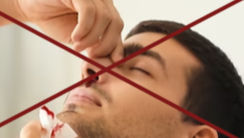
3. After 15 minutes, let go. If it has not stopped, repeat pinching your nostrils together for another 15 minutes.
A couple of other things that might be worth trying: You can put an ice-cold wrapped bag of ice (or a wrapped bag of frozen vegetables) on the back of your neck (like the person in the first picture above) or put it on the bony bridge of your nose. This causes your blood vessels to constrict—or get smaller—and does not let as much blood flow to the nose.
Also, if you have any Afrin nasal spray around, you can spray two sprays in the bleeding nostril, gently sniff it into your nose, and then hold the nose (Afrin also constricts blood vessels so they do not bleed so much) (1)
There are a few other brands of this. The active ingredient is oxymetazoline, listed on the back of the box.
When to go to Urgent Care or ER
1. If your nosebleed is active, it does not stop after about 30 minutes
2. If you have had some trauma to your nose (it may be broken)
3. If you are on blood thinners like Coumadin (warfarin), Eliquis, Pradaxa, or an anti-clotting agent like aspirin, others. You may need a blood test to check on how "thin" your blood is. These nose bleeds can be hard to stop.
4. If you feel dizzy or confused (especially with a significant nosebleed).
5. Chest pain, shortness of breath, or if you know you are prone to extremely high blood pressure.
What causes recurrent nose bleeds
Lots of things can cause recurrent nosebleeds:
Dry air
Sinus infections
Blowing your nose too harshly
Nasal sprays
Snorting drugs
Nose picking
Certain medications (especially blood thinners - including aspirin)
Some underlying medical problems
What to do if you get frequent nose bleeds?
Consider the possible causes (above) and try to change or remediate the source.
Try using a humidifier to moisten the air.
Use a gentle nasal saline spray regularly (as directed over the counter).
Apply a very thin layer of Vaseline or saline gel (Ayr) to your nose around the nostrils, including the
septum or middle wall, separating the nostrils. Don't go too far back.
Don't pick your nose.
Don't blow your nose too hard (especially after a nosebleed) - this can irritate it or dislodge clots.
If the above measures do not work, please see a primary healthcare provider. Sometimes, people need more aggressive treatment (like cauterization of the thin vessels) or have more serious underlying medical conditions.


