
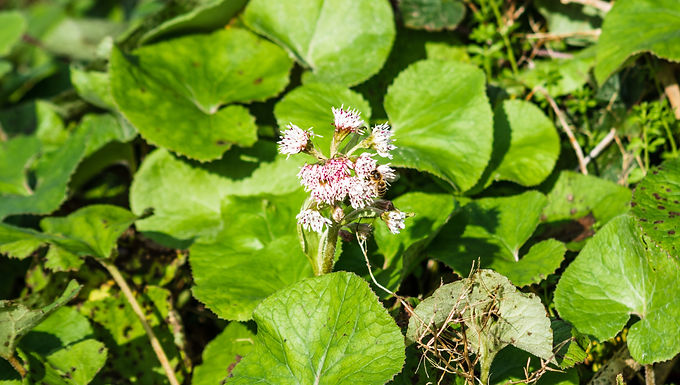
General Information
OTHER NAMES: Petasites hybridus, purple butterbur
HISTORY: Middle Ages butterbur was used to treat plague and fever; for centuries, it has been used for headaches
PROPERTIES: Antiinflammatory
Considered Uses
Respiratory: Allergies, Allergic rhinitis/runny nose (fewer side effects than antihistamines); asthma; whooping cough (pertussis)
Gastrointestinal: Stomach upset, ulcer prevention, stomach cramps, stimulates appetite
Genitourinary: Urinary tract infections, irritable bladder
Musculoskeletal: Inflammation, pain
Neurologic: Headaches; Migraines (prevention)
Skin: May help enhance wound healing, eczema
Mental Health: Anxiety, depression, and anxiety related to physical pain (somatic symptoms disorder)
Glucose: May help decrease blood sugar
Cholesterol: decreases cholesterol
Infectious Disease: Plague
Other: Insomnia
* * *
SIDE EFFECTS: Belching, headache, itchy eyes, diarrhea, upset stomach, fatigue, and drowsiness. Butterbur can also be liver toxic and possibly a carcinogen (cancer-causing agent) if it contains pyrrolizidine alkaloids (PAs)—read the label to be sure it is PA-free.
CAUTION/CONTRAINDICATIONS: Allergies to ragweed, chrysanthemums, marigolds, daisies. Liver disease. Do not use if you are on Medications metabolized by the CP450 3A4 pathway. (Common examples: carbamazepine [Tegretol], phenobarbital, phenytoin [Dilantin], rifampin)
FORMS: Capsules and tea (must be processed; otherwise, it may be liver toxic).
Brand Recommendations
Not available at this time.
Dosage
As directed on the product label.
Some clinical and consumer sources describe a wide range of herbal amounts, and many are not supported by strong evidence. Always follow the manufacturer’s instructions.
According to NIH publications, amounts used in studies vary widely depending on the formulation and purpose. These study amounts are not clinical recommendations and may not apply to consumer products.
For detailed drug dosing and interaction information, refer to Epocrates.
Traditional Use (General Information Only)
This herb has been used traditionally in various forms, including capsules, tablets, and extracts. Traditional uses vary widely and are based on historical practices rather than modern clinical evidence.
These reflect traditional and consumer uses, not evidence‑based medical treatments. Product formulations vary, so it is important to follow the manufacturer’s directions.
*Disclaimer: The material above is for informational purposes only. This information is not intended to diagnose or treat a condition. The uses listed above are tentative; some have or are undergoing research trials, but many are not FDA-approved. It is essential that you investigate these supplements further before deciding to use them. Check interactions and contraindications on sites like Drugs.com or WebMD. Do not attempt to treat a serious condition like liver, kidney problems, high blood pressure, heart, cancer, diabetes, or thyroid issues without discussing it with a healthcare provider first. If you are pregnant, do not use supplements without discussing it with your healthcare provider.