
Understanding and Caring for Your Body as It Ages
Updated: 4 days ago
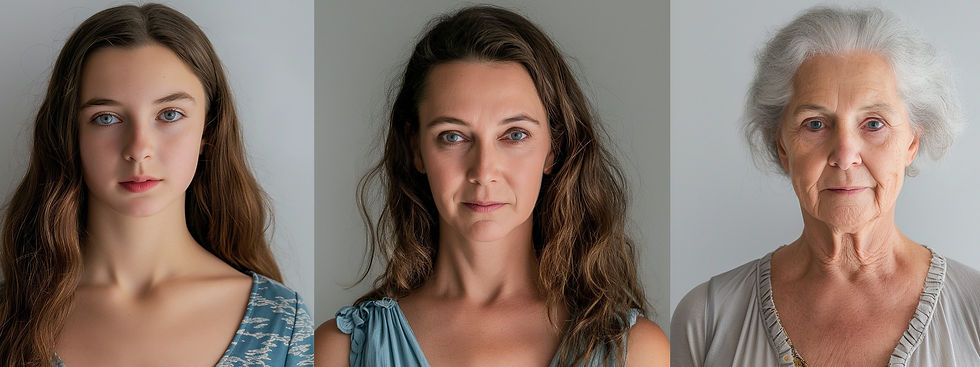
So, What Are We Looking at Here?
Caring for your body as it ages begins with understanding the physical changes that occur over time and the evidence‑based strategies that help support long‑term wellness.
Aging is the process of everything — every cell, every system, every habit, every experience. It’s not a single event but a lifelong shift in how the body repairs, adapts, and responds to the world. What we’re really looking at is change: slow, steady, universal, and deeply human. Aging isn’t just about wrinkles or birthdays; it’s the biology of time, the psychology of identity, and the culture we’re all trying to keep up with.
As the years unfold, the world’s complexity and the passage of time leave their quiet imprint on us — not unkindly, but in the way a life fully lived does.
By the time we are 60, we’ve lived more than half a million hours — we have spent our time absorbing the world, learning from it, and being shaped by it. Over those years, our inner child settles into an adult shaped by growth, joy, sorrow, and change. We become more emotionally mature, able to see both the yin and the yang in ourselves and in others. We have seen and felt the sunshine, the soft gray patter of the rain, and the cold of winter — when we marveled at the unique design of every snowflake.
As we reflect on our lives, we begin to identify our deepest values. We acknowledge what we’ve done well — and where we’ve stumbled — and we come to accept all of it. We explore our worth — to ourselves, to the people we love, and to society. We come to see our capabilities, our strengths, and our talents more clearly. And as we age, we also come to know our limitations, which naturally grow with age. We can resist them, or we can accept and work with them, sometimes even discovering new abilities we didn’t realize we had. Maslow called this deepening self‑understanding “self‑actualization” — the gradual process of becoming more fully ourselves. As we grow into ourselves, we also come to understand something else about life: the people around us change too.
We walk a long path, and along the way some people travel beside us for a short time, some stay with us for many years, and some leave far sooner than we ever imagined. Each one shapes us, even after they’re gone.
At this time in our lives, we have the freedom and opportunity to reinvent ourselves, guided by the long history of our own lived experience. And as we deepen our integrity and empower ourselves, we become a source of strength for the generations who follow.
The Aging Population is Growing in the US
We have an aging society. In 2025, there were nearly 64 million people in the US over 65. This makes up 18.4 percent of the population. In 2030, estimates of those over 65 years are 73.7 million (1)(2)
Longevity, or the ability to live a long life, depends on many factors. Modern medicine plays a partial role, but it is only one factor in the story of longevity. Genetics also plays a role, shaping certain health traits and tendencies we carry through life. The experiences we’ve had throughout our lives, the environments we grew up in, and the lifestyle choices we have made (and continue to make) all shape how long we live and our quality of life.
Our Culture Shapes Aging — “Plastics."
Our culture in the United States can be hard on aging people. While many societies honor their elders, ours often views aging through a harsher lens. Much of our media reinforces the idea that “young is good and old is bad.” So people try to alter their facial features — their “lifelines,” the map of the roads they’ve traveled — along with their breasts and bellies. In 2022, Americans spent more than 26 billion dollars on both minor and major plastic surgery (3). Why? Most of these procedures weren’t done for health reasons, but because our society glorifies a narrow, youthful ideal of beauty. Too often, these surface traits are valued more than experience, wisdom, and the inherent beauty of age.
A Deeper Truth About Aging
While many people may achieve a youthful, more “attractive” look, the rest of the body is often overlooked. Wanting to look good is completely understandable, but nurturing your mind, body, spirit, and overall well‑being is equally, if not more, important. On its own, plastic surgery can’t do all the work. As we grow older, we often rely less and less on outside approval and more on the inner strength and confidence that come from greater self‑awareness.
We inherit certain conditions — allergies, vision problems, high blood pressure, high cholesterol, some types of arthritis, some cancers, and tendencies toward migraines, thyroid issues, or osteoporosis. While we can’t erase these, many can be minimized so they become far less debilitating as we age.
There are also conditions we can often avoid altogether — including type 2 diabetes, many obesity‑related problems, some mental health challenges, lung diseases such as COPD and smoking‑related cancers, certain skin cancers, and others — simply by changing our habits and environment.
Why You Should Care
The pages ahead explore the changes our bodies experience as we age — and the. You can change things and live a healthier and happier life.
Age‑Related Changes and What We Can Do About Them
The body is an incredibly well-oiled machine; however, living is a lot of work: It is no surprise that, with time, things do get a bit rusty. Continued use, genes, and the environment lead to chemical and cellular instability.
As years go by, parts of the body change and tend to decline. This includes the cardiovascular system, respiratory system, ears, eyes, nose, and throat; the digestive and genitourinary tracts; the endocrine, musculoskeletal, neurologic, and immune systems. Even the normal microbiome — the organisms that live on and in your body to protect you — can and does change.
Along with these physiologic changes, psychological changes also occur.
All of the cells in our body work together inside a background of extracellular fluid. As this fluid changes with age, it affects how our tissues repair, how hydrated our skin feels, how flexible our joints are, and even how strong our immune system stays.
Understanding Your Body Helps Support Healthier Outcomes in the Future
Aging is a transition we can move through with confidence when we understand what’s happening inside our bodies. When we recognize how our inner environment naturally changes over time, we gain the knowledge and motivation to support our energy, mobility, and vitality at every stage of life.
Understanding the microcosm of your body’s inner environment helps explain the basis of the aging process — and shows that it’s not just your imagination.
Your Body Is Made Up of About 3 Trillion Cells
Your body’s inner environment changes with age, and it starts at the cellular level.
First, your body is made up of about 30 trillion cells. These cells work together to repair damage, replace worn‑out cells, eliminate waste, support growth, and maintain healthy skin, blood, and the gut lining. They also make energy and carry out everyday tasks your body needs to stay healthy.
Healthy cells are essential for keeping the body functioning well. Many specialized cells divide year after year, but this division gradually slows as we age — and in some cell types, it eventually stops altogether. When cell division slows or stops, the body’s ability to repair damage and renew tissues declines, threatening optimal function.
Extracellular Fluid: The Environment Your Cells Depend On
Collagen is often talked about in skincare and wellness, but its role inside the body is far more important than most people realize.
Extracellular fluid is the fluid that surrounds and bathes your cells. It carries nutrients, oxygen, and signaling molecules your cells need to function.
Why it matters: This fluid environment contains one of the most important substances found outside your cells — collagen.
Collagen is the body’s main structural protein. It gives tissues their shape, strength, elasticity, and ability to repair. As we age, collagen production decreases, and existing collagen fibers become weaker, fragmented, disorganized, and lower in quality.
You see this on the outside as sagging skin and wrinkles. But collagen loss also affects the inside of the body: it weakens bones and ligaments, slows wound healing, reduces blood vessel resilience, and thins the gut lining.
Collagen isn’t the only extracellular substance that declines with age. Other key components — such as elastin (responsible for stretch and recoil), hyaluronic acid (responsible for hydration and cushioning), and proteoglycans (responsible for shock absorption and tissue support) — also diminish or change in quality over time. Together, these age‑related changes weaken the body’s structure and function, especially in the skin, joints, blood vessels, and connective tissues.
This is why taking care of your body becomes more important over time. It’s simply part of the journey — a reminder that our focus must be on keeping our minds and bodies well and strong so we can continue to feel our best. As an old familiar saying goes, “To every thing there is a season, and a time to every purpose under heaven.” Aging is one of those seasons — and understanding it leaves us better equipped to handle the future.
The Changes That Come With Time
Body Changes With Age: Understanding and Caring for Your Body as It Ages
Organs and Systems of the Body
As we age, changes occur not only in our skin and joints but also within the body’s major organs and internal systems. These shifts influence how we feel, how we function, and how resilient we are over time. Understanding these changes helps us recognize what aging really means and how to navigate it with confidence.
The Heart and Other Cardiovascular Structures
The heart is often considered one of the most important organs in the body. A person cannot live long with a temporary device that helps the heartbeat, but they cannot live long — if at all — without a functioning heart.
By the time someone reaches their mid‑sixties, their heart has already beaten about 3 billion beats (4). It’s amazing when you think about it.
For years, the heart and blood vessels have worked continuously to circulate blood through an intricate network stretching from head to toe, delivering oxygen, nutrients, hormones, and disease‑fighting cells while carrying away cellular waste. In doing so, the cardiovascular system maintains a delicate equilibrium that supports the body’s function and health.
The Heart
Over time, the heart’s hard work can lead to structural changes. About 10–20% of older adults develop some degree of cardiac enlargement, especially those with high blood pressure, valve problems, or stiffened arteries (5). As the heart pumps against increased resistance, the muscular wall thickens. The heart becomes larger, but not more efficient. Thickened walls leave less room for blood inside the chambers and reduce how effectively the heart can pump.
In some people, these changes progress to heart failure. When the heart can’t pump enough blood, a person may feel tired, short of breath, swollen in the legs or feet, or unable to do everyday activities as easily — all common signs of heart failure.
The heart’s electrical system also becomes less efficient with age. This increases the likelihood of irregular rhythms, which can cause palpitations, dizziness, or fatigue.
These age‑related changes are strong reasons to pay close attention to heart health over time.
Blood Vessels
Our blood vessels carry blood to every part of the body, delivering oxygen and nutrients to tissues and organs while removing waste. Over time, this system experiences wear and tear, and those changes can affect how well the vessels do their job.
As we age, fats and cholesterol can also build up inside the arteries, forming plaque that narrows blood flow (atherosclerosis). The arteries also naturally become stiffer and less able to expand and contract (arteriosclerosis). Some people inherit a tendency toward these vessel changes; others develop them over time due to lifestyle factors, and many people experience a combination of both.
When arteries are narrowed or stiff, the heart has to work harder to push blood forward, and less oxygen reaches vital organs like the brain, kidneys, and heart. As these changes progress, they increase the risk of high blood pressure, peripheral artery disease, stroke, coronary artery disease, and heart attacks.
Slowing — or even reversing — these changes is important. Healthier arteries mean better circulation, less strain on the heart, and stronger protection for the organs you depend on every day.
Even the tiny capillaries that branch off the arteries become less responsive with age, slowing the exchange of oxygen, nutrients, and waste in the tissues.
Valves
The heart and blood vessels rely on valves to keep blood moving in the right direction. In the heart, four valves open and close with every heartbeat, preventing backward flow and ensuring blood moves efficiently from chamber to chamber and out to the body.
With age, these valves can become thicker, stiffer, and less flexible, and small calcium deposits may form. The electrical system that coordinates each heartbeat also becomes less efficient.
Together, these changes can lead to high blood pressure, heart valve problems such as aortic stenosis, and arrhythmias (irregular heartbeats), among other things. Cardiac valve disease becomes more common with age — Large U.S. studies show that clinically significant heart valve problems affect about 10–15% of older adults, and age‑related valve thickening is extremely common (6), especially in those with long-standing high blood pressure or arteriosclerosis. Mild valve thickening is seen in more than half of adults over 65.
You also have valves in other parts of the circulatory system — not just in the heart. In the veins of the legs, tiny one‑way valves work constantly against gravity to keep blood moving upward toward the heart. Over many years, the structural changes described above — combined with added pressure from obesity, standing, walking, and even long periods of sitting — stretch the vein walls. When a vein stretches, the valve flaps can’t meet in the middle anymore, so they stop closing tightly, and blood begins to slip backward and pool.
Nearly half of adults develop some degree of venous valve dysfunction by midlife, and more than 70% of older adults show signs of venous insufficiency (7).
This slow, mechanical process explains why swelling, heaviness, spider veins, and varicose veins become so common with age.
Baroreceptors
There’s a part of your cardiovascular system you rarely hear about — yet you rely on it every time you stand up, take a deep breath, get startled, or even finish a meal. These are your baroreceptors. They’re microscopic pressure‑sensing nerve endings tucked inside the carotid arteries in your neck and the aorta in your chest, and despite their size, they play a huge role in keeping blood pressure stable from moment to moment.
Whenever blood pressure suddenly rises or falls, baroreceptors instantly alert the brain to correct it. They respond to quick changes caused by standing, emotional stress, exercise, deep breathing, temperature shifts, coughing, eating, dehydration, and many medications. But as arteries stiffen with age, these sensors become less responsive, making blood pressure more unstable and increasing the risk of dizziness or orthostatic hypotension (a sudden pressure drop that causes lightheadedness or a feeling of almost fainting).
Why This Matters for Your Health
All of these age‑related changes — in the heart muscle, the valves, the baroreceptors, and the blood vessels — add up over time. They influence blood pressure stability, rhythm control, circulation, exercise tolerance, and how quickly the body recovers from stress. But the encouraging truth is that many of these shifts can be slowed, and some can even improve, with the right habits.
The earlier in life you start, the better. But if you are running late, that’s okay too. Your body is your personal temple — the one place you truly live “forever.” Treat it with care, respect, protect it, and maintain it.
Take action today. Start looking at the steps below and choose one or two things you can start doing now. Start small, and gradually build everyday actions that support cardiovascular health. Be proactive.
Ideally, start these healthy habits when you are young. The longer you wait, the harder it is to change things.
Heart‑Healthy Foods and Supplements: Proven Ways to Support Your Heart and Lower Cholesterol
Motivation to Move for Heart Health
Finding Motivation to Exercise for Heart Health: You Can Do It
What’s Standing in Your Way — and What Opens the Doors?
The Lungs
The Lungs
A person takes, on average, about 300 million breaths by the age of 65. In fact, the lungs are one of the most durable biological machines ever built, but not because they avoid wear. They often last longer because they continuously repair themselves, something no engineered machine can do. From day one, they endure constant mechanical stretching, temperature swings, humidity changes, and exposure to pollution, pathogens, allergens, and even irritation or injury from coughing and infection.
Oxidation, a normal and necessary process that helps lung cells make energy and perform repairs, also changes over time as the body becomes less efficient at regulating it. As you age, your cells don’t manage that process as smoothly. Irritants like smoke, chemical fumes, and aerosols can send oxidation into overdrive, harming lung cells and leading to inflammation and disease over time.
With decades of work behind them, the lungs can – and do – change. Protecting and preserving them is essential at every age. And because the lungs undergo so many changes as we get older, building daily habits that support lung health becomes critical if you want to breathe your best.
Your Lungs Start Aging at 30 — Here’s What Changes
Many anatomical and functional lung changes begin around age 30, but they happen slowly and usually aren’t noticeable until later decades. In the 40s, a person may feel more of the effects of physical exertion, and by the 50s and 60s, symptoms usually become more noticeable and can begin to spiral.
Let's Look At These Changes – They Just May Be Motivating
Few people understand all the changes that can take place in the lungs as they age. Again, some of these changes may seem disconcerting, but understanding them—and knowing how to work with them—can help you breathe better, protect your lung function, and stay healthier as you grow older.
Lung tissue becomes stiffer and less elastic as you age. This makes it harder for the lungs to expand and contract, reducing the amount of air you can move in and out, and slowing the exchange of oxygen and carbon dioxide. Breathing can feel heavier or more labored, especially during activity.
Alveoli lose surface area. Alveoli are the tiny structures in your lungs responsible for getting oxygen into your bloodstream and taking carbon dioxide out. As a person ages, excessive enlargement and destruction of alveoli reduce the area available for this gas exchange. This ultimately reduces the oxygen delivered to the body and allows carbon dioxide to build up, which, if severe, can be life-threatening.
Muscles responsible for breathing gradually weaken. The diaphragm and the muscles attached to the ribs are responsible for the mechanics of breathing. These muscles naturally weaken, making inhalation and exhalation less efficient.
Low‑grade inflammation becomes more common. Aging lung tissue tends to develop chronic, mild inflammation, which can affect comfort, airflow, and resilience. This is commonly due to environmental exposure and years of exposure to various irritants.
Airways gradually narrow. Loss of elasticity, thickened airway walls, weaker breathing muscles, and decades of harmful oxidative stress narrow the airways, diminishing airflow into and out of the lungs.
Immune defenses decline. Key immune cells that live and operate inside lung tissue—macrophages, neutrophils, and dendritic cells—become less active and less efficient, making the lungs more prone to infections from bacteria, viruses, and inhaled particles. This can also change allergies to things like dust, pollens, molds, and dander: allergies can get worse (because of changes in lung conditions), or they may improve because one of the primary immune cells, IgE, decreases and mast cells become less reactive.
Chemoreceptors located in different parts of the body help regulate breathing. Those in the brainstem and hypothalamus normally sense changes in carbon dioxide, while other chemoreceptors in the carotid arteries sense drops in blood oxygen. Together, they signal the brain to speed up or slow down according to the body's needs. As a person ages, these "sensors" lose sensitivity, so breathing doesn’t adjust the way it should; the rest of the body feels the consequences.
Protective molecules in the lungs decrease. Antimicrobial peptides, surfactant proteins, antioxidants like glutathione, and repair/signaling molecules diminish with age, reducing the lungs’ ability to defend and repair themselves.
Cilia decline in number and function. Cilia are tiny hair‑like structures that line the airways. They function to move mucus and irritants out of the airways. As one ages, they become fewer and move more slowly, allowing mucus and irritants to accumulate more easily. (Smoking damages and often kills cilia; however, when a person quits, they often regrow.
Cell regeneration slows. Many lung cells can regenerate, but aging reduces this process. Some cells die from senescence (they are programmed by DNA to cease functioning) or they become damaged. The lungs’ overall repair capacity becomes slower, causing a loss of cells.
Based on the above, it stands to reason that reduced oxygen (hypoxia) and increased carbon dioxide (hypercapnia) can create many potential “downstream” effects throughout the body. All cells and organs require oxygen and waste removal to function optimally.
Again, these changes develop so gradually that they often go unnoticed until later in life when signs and symptoms begin to appear.
Signs and Symptoms of Oxygen–Carbon Dioxide Imbalance
Breathing
Shortness of breath
Wheezing or a feeling of tightness
Difficulty clearing the airways of mucus/weak cough
Feeling like you can’t get a full breath
Rapid, shallow breathing
Discomfort or pain when taking a deep breath
Fatigue, lightheadedness, or a “heavy” feeling when breathing
Use of accessory muscles (neck, shoulders) to breathe
Cyanosis (bluish lips or nailbeds)
Low oxygen saturation on a pulse oximeter
Abnormal breath sounds (wheezes, crackles)
Increased heart rate
Barrel chest (rounded chest)
Heart‑Related Signs and Symptoms
(Lack of oxygen can lead to circulation and heart problems, which may be demonstrated by the following signs and symptoms:)
Cold extremities (hands, feet, fingers, toes)
Fast heart rate (tachycardia)
Palpitations (awareness of your heartbeat, pounding or fluttering)
Chest tightness
Pallor (pale skin)
Strain on the heart, which increases the risk of heart damage or even a heart attack
Neurological Signs and Symptoms From Altered Oxygen Levels
Headaches
Dizziness or lightheadedness
Confusion/mental fog
Difficulty concentrating
Fatigue
Restlessness
Anxiety
Morning fatigue
Movement and musculoskeletal Effects
Lack of oxygen can also cause muscle and whole-body symptoms.
Weakness
Lack of Stamina
Exercise intolerance
Slowed movements
Other Effects Caused by Aging Lungs
Difficulty breathing while eating because the person cannot get the frequent breaths needed when short of breath (as in COPD)
Loss of appetite, sometimes simply because eating becomes exhausting
More Lung infections, like pneumonia and bronchitis, occur more easily and are more difficult to recover from
Chronic bronchitis can wreak havoc with even the strongest individuals
Temperature regulation becomes disturbed — increased sweating or, on the opposite end, feeling chilled
Thinning hair
And many more effects that ripple through the body when lung efficiency declines
It seems bleak, doesn’t it? But bleak does not mean hopeless. You can do something about it. But you need to want to; otherwise, things that do not have to happen will happen.
So, what can you do to optimally prevent and possibly even reverse lung problems? You read this; you keep the purpose in mind. There are many, many things you can do to try to preserve your lung function — your body in general. Let’s explore these.
It seems bleak, doesn’t it? But bleak does not mean hopeless. Bleak but not hopeless. It’s just a fact of life, and you can do something about it. But you need to want to; otherwise, things that do not have to happen will happen.
So, what can you do to optimally prevent and possibly reverse some lung problems? As you read this, keep the purpose in mind. There are many, many things you can do to try to preserve your lung function- your body in general! Let's explore these. We will explore these in the publication ahead.
What You Can Do to Help Prevent Lung Problems, and Improve Breathing
Learn about ways to optimize your lung function to maintain it and possibly improve it- with approaches like breathing exercises, supplements, and medication in:
The Ears, Eyes, Nose and Throat (EENT)
Yes, these too change over time
As we get older, keeping every sense functioning well becomes increasingly important. The following sections explore how aging affects hearing, vision, smell, and taste, along with the changes a person can expect over time. Each section includes practical approaches that can help offset or slow these age‑related changes.
In an ideal world, we’d all learn healthy habits early and carry them forward as we grow. But that’s not how most of us were taught. Life pushes many of us toward quick fixes and immediate rewards, often at the expense of long‑term health and well-being. We wait until something goes wrong, then try to fix it. The message here? Start taking care of yourself whenever you can —and if you haven’t already, today is a good time to start.
Hearing Changes
An Overview of Hearing
According to the Mayo Clinic, by age 75, nearly half of all older people experience some hearing loss. Of course, hearing loss varies by individual and the conditions they may have encountered in the past.
Our hearing is regulated by the following:
1)Outer hair cells (IHC’s) that pick up sound and amplify it.
2) The inner hair cells in the cochlea, which convert vibrations into electrical impulses
3) Electrical impulses travel down the auditory nerves in the brain
4) Impulses arrive at the frontal lobe of the brain, where they are interpreted.
Hearing - What Changes as You Age?
As we age, the entire hearing system gradually changes. The outer hair cells—that initially sense and amplify sound—tend to weaken first. Over time, the inner hair cells also lose efficiency, and the connections between these cells and the auditory nerve begin to weaken. Eventually, the nerve fibers themselves decline, and even the auditory cortex in the brain can become less sharp at interpreting sound. This process is called presbycusis, and all of these structures can age, but the pace and pattern of change vary widely from person to person.
Some of these changes can be prevented.
What contributes to hearing loss besides aging?
Many, many other factors can contribute to this as well. The good news is that many of these are within our control, and while hearing loss cannot be cured, some hearing loss can be prevented through certain actions. You can also improve hearing through other means. But, again, you cannot cure hearing loss. The following sections outline these other causes.
Long-term loud sound exposure
Frequent loud machinery or industrial noise
Remember your years of listening to loud music? (concerts, headphones, car stereos)
Recurrent ear infctions/sinus problems
Chronic or repeated ear infections
Chronic sinusitis or allergies affecting the Eustachian tube or vestibular system
Ototoxic medications (medicines known to damage hearing structures)
Chemotherapy drugs (e.g., cisplatin)
“Mycin” antibiotics (aminoglycosides)
Some non-steroidal anti-inflammatories (NSAIDs)
Certain antifungals
Diuretics
Some serotonin reuptake inhibitors (SSRIs)
Infections and illnesses (sensorineural damage)
Meningitis
Measles
Mumps
Rubella
Syphilis
HIV
COVID‑19
Frequent childhood ear infections
Chronic health conditions (sensorineural loss)
High blood pressure
Diabetes
Cardiovascular disease
Multiple sclerosis (MS)
Rheumatoid arthritis (RA)
Trauma
Head trauma or ear injury
Age-related neurologic or structural conditions
Acoustic neuroma (vestibular schwannoma)
Stroke affecting auditory cortex or brainstem pathways
Parkinson’s disease
Alzheimer’s disease
Genetics
Family history of early or progressive hearing loss
Inherited structural or metabolic tendencies affecting the inner ear
Clues That You May Have Hearing Loss
People often miss the early signs of hearing loss. Common clues include:
“What? What??”
“Honey, you don’t seem to hear what I’m saying.” (Sometimes selective inattention — but often a classic sign of hearing loss)
Hearing muffled speech or sounds
Difficulty understanding words, especially in crowds or noisy places
Asking others to speak more slowly, clearly, or loudly
Turning up the volume on the TV or radio
Avoidance of social settings
Feeling annoyed or overwhelmed by background noise
Tinnitus (ringing in the ears)
hearing loss,
If you or someone you know seems to be experiencing a hearing loss, it is important to see a healthcare provider. They may refer you to an audiologist.
What to do about Chronic and Acute Hearing Loss
It is particularly important to see a healthcare provider for a medical evaluation if you experience:
A healthcare provider will typically check for earwax buildup that may be impairing your hearing. Some people just have a tendency toward wax buildup - or cerumen impaction. - but as we age, cerumen becomes drier and harder, making it more likely to accumulate and block the ear canal. This can be safely cleaned out by a healthcare provider or ENT.
If wax is minimal, the next step is a hearing evaluation by an audiologist to determine whether true hearing loss is present.
How an Audiologist Can Help
An audiologist can test, dicover the cause and offer several options to help improve hearing.
Hearing Aids
Modern hearing aids are very small and discreet. Many people also benefit from TV or phone amplifiers.
You can now buy FDA‑regulated over‑the‑counter (OTC) hearing aids for mild to moderate hearing loss. They are more affordable than prescription devices and several models perform well, according to FDA guidance and ConsumerLab reviews.
Surgical Options
For certain conditions, an audiologist or ENT may recommend:
Eardrum repair
Cochlear implants (which electrically stimulate the auditory nerve) for severe hearing loss
Regularly Monitor for Hearing Loss
While it’s ideal to have your hearing checked by an audiologist every year or two, Medicare and most insurance plans usually don't cover routine hearing tests after age 40 unless you have noticeable hearing changes or specific symptoms. These symptoms include tinnitus (ringing in the ears), dizziness or vertigo, persistent ear fullness or pressure, suspected middle‑ear disease, or the need to monitor an existing hearing condition.
Even though coverage is limited, regular hearing screenings are still recommended—especially after age 40 or for anyone exposed to loud environments over many years. Early testing allows for early detection and intervention, which can help preserve hearing and prevent long‑term damage.
